Whisky Fact Check – Part 2
Tangible Chemistry – Why Tannins in Whisky Make the Mouth Feel ‘Dry’
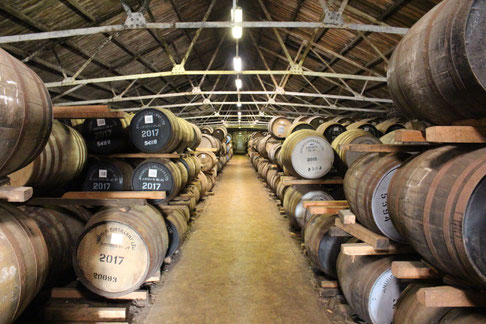
When describing matured whiskies, one term often stands out: ‘dry’ or ‘astringent’. It’s not uncommon for people to quickly mention tannins from the oak cask – claiming they’re responsible for that slightly rough, tightening sensation in the mouth.
But what exactly is behind this? What actually happens in the mouth? And why does a whisky suddenly feel “grippy”, even though it is a liquid?
So it’s time to take a closer look at this supposedly familiar connection. Time for our next fact check!
Introduction
Anyone who has tasted a whisky that has been matured for a long time in an oak cask will recognise this moment: the first sip spreads warmly and aromatically – and then something exciting happens. The mouth tightens slightly, and the tongue suddenly feels rougher, almost a little furry. The whisky seems to take on a ‘grip’.
What we are perceiving here is known in sensory analysis as astringency. And as unremarkable as this sensation may seem, it is the result of an astonishingly complex interplay between the chemistry of the wood and our own bodies – a surprising interaction between tannins and our saliva.
Tannins – the backbone of the oak cask
During the years of maturation in the cask, much more happens to the whisky than just the development of flavour. Certain substances are gradually released from the wood of the staves – including tannins, also known as astringents.
These plant compounds belong to the group of polyphenols and are widely found in nature – for example, in grape skins or tea. They include substances such as ellagitannins and gallotannins. In the oak cask, they are something like the silent architects of the structure: they contribute to the colour and give the whisky backbone, depth and a noticeable texture.
What is particularly interesting is the difference between the various oak species. European oaks such as Quercus robur or Quercus petraea often yield more and stronger tannins
– whiskies made from them tend to be more distinctive, spicier and sometimes slightly drier. American white oak, Quercus alba, on the other hand, usually imparts a softer, rounder
texture.
What really happens in the mouth
However, that characteristic dry, tightening sensation has nothing to do with actual fluid being drawn from the mouth. On the contrary: the cause lies in a subtle but crucial change in our saliva.
Human saliva contains a variety of proteins that are essential for digestion and for protecting the oral cavity. These include substances such as mucins and proline-rich proteins, which fulfil an important function: they ensure that saliva forms an invisible film over the tongue and the oral mucosa. This acts as a natural lubricant – everything feels supple and smooth.
When a tannin-rich whisky comes into contact with this film, a small molecular reaction begins: the tannins bind to our salivary proteins. In the process, the proteins aggregate to form larger complexes. Some of these complexes precipitate out, and the protective lubricating film loses its lubricating properties.
The result: the tongue and palate rub against each other more strongly. And it is precisely this increased friction that our sensory cells register – and interpret as what we describe as dry,
rough or furry.
Why ‘dry’ is a good thing here
And now for the crucial point: this dryness is not a fault – but a mark of quality, provided it is well integrated.
In moderate amounts, astringency provides precisely what many people appreciate so much in mature whisky: a noticeable grip on the palate, a longer, dry finish and a texture that lends tension and structure. As a result, the whisky seems less oily or one-dimensional, but gains in character. An effect that is also familiar from great red wines – though often more subtle.
Maturation changes everything: from harsh to velvety
However, tannins do not remain unchanged. During the long period of cask maturation, they undergo a kind of maturation of their own. They bind together and react with oxygen and other components
of the whisky. Over time, they become more pronounced, more complex – and, above all, milder.
What may initially seem sharp and slightly rough develops over the years into a softer, almost velvety texture. The whisky does not lose its structure in the process, but gains in elegance.
Conclusion: When chemistry becomes tangible
That dry sensation in the mouth is therefore far more than just a passing sensation. It is the direct result of a molecular interaction between oak and saliva. Tannins actively influence our taste experience: they alter the texture, prolong the finish and give the whisky its characteristic ‘grip’.
Or to put it another way: what feels like a slight tightening in the mouth is in reality a highly complex interplay of wood chemistry, the physics of saliva and sensory perception. You are not just tasting flavour – but chemistry in perhaps its most sensual form.
And it is precisely this interaction that accounts for much of the fascination of matured whisky.